
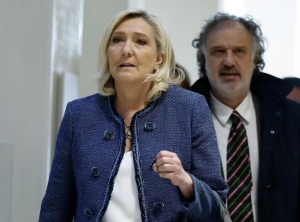
Convicted and declared ineligible for public office, Marine Le Pen has decided to fight. She has no choice: after a 25-year political career, she can’t afford to bow out in a courtroom. If she wins her appeal - scheduled for the summer of 2026 - she’s back in the race for the presidency—stronger than ever, riding a wave of sympathy as the target of a “politicized” justice system. If she loses, she’ll have to step aside and make room for her successor, Jordan Bardella. But stepping aside now would expose Bardella too early. He’s still relatively inexperienced, and two years under media fire could fatally damage his chances.
One battleground could be Parliament. Bringing down Macron’s government might satisfy her base—but it’s risky. A snap election would mean she immediately loses her MP seat due to her ineligibility. Worse, triggering internal political chaos could push voters to back a more moderate figure in 2027, like former macronist Prime Minister Édouard Philippe. That’s why, even if the left pushes for a no-confidence vote, Le Pen’s National Rally probably won’t support it. Their strategy is simple: let Macron’s camp limp into 2027.
Street protests are another card Marine Le Pen might play—but the early signs aren’t great. Her April 6, 2025, rally, in Paris - Place Vauban, drew only 7,000–8,000 supporters. The upside for her is that rallies held the same day by the left and by Macron’s party leader, Gabriel Attal, attracted even fewer people. Still, with warmer spring weather ahead, it's unlikely she’ll be able to mobilize massive crowds. That said, she’s not dropping the street strategy just yet. A new rally is planned for May 1, in Narbonne—a National Rally stronghold, where her party won an MP seat last year against a left–macronist alliance. The choice is tactical.
Finally, another option for Marine Le Pen is to fight in the international arena. Many foreign leaders expressed support for her, immediately after she got convicted (Donald Trump, Giorgia Meloni, Viktor Orban, President Putin’s spokesperson Dmitri Peskov). So, she can work to reinforce her position in the European Parliament, push her European parliamentarians to be more assertive towards initiatives from the Popular, Renew and Socialist Groups. She can also strengthen her ties with European conservative and “trumpist-minded” leaders, such as Orban, Wilders, Fico, Milei, build ties with Donald Trump, and repair her relationship with Nigel Farage. French people are highly averse to external pressures on their deciders or the judiciary, so these foreign allies will never urge judges to decide an acquittal for Marine Le Pen. However, such conservative alliances could throw a wrench into president Macron’s European and global initiatives for the last two years of his mandate and make his foreign policy track record look highly insufficient.
In short, Le Pen’s best option may be a low-exposure strategy: keep the rallies going here and there, and build up conservative alliances abroad, while waiting for the legal battle to play out.