
Ahead of the municipal elections, I argued that Emmanuel Grégoire (Socialist Party - Left) was the best positioned to win - not only because of polling dynamics, but because of the fragmentation on the Right and the historic Paris leaning toward the Left.
Emmanuel Grégoire was elected with 50.5% despite the centrist and far-right candidates - Pierre-Yves Bournazel and Sarah Knafo - withdrawing in the second round in favour of Mrs. Rachida Dati (Right), who came second with only 40.5%. Mr. Bournazel refused to be part of a common list with Mrs. Dati and instead sent his colleagues and advisors. On the other hand, Mrs. Knafo’s offer for a formal "Union of the Right" was declined by Mrs. Dati, determining the far-right politician to step down and request her voters to support "the Right", and not Rachida Dati. These last-minute half-rallies to Mrs. Dati could not change Parisians’ perception of the Right’s deep divisions.
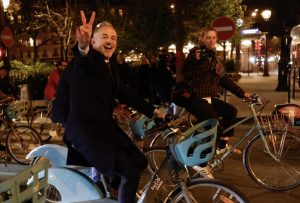
Emmanuel Grégoire’s bicycle arrival at the Paris Hôtel de Ville on the night of his election is symbolic. His plan is to accelerate the transition toward a more sustainable, green, and liveable metropolis for its residents - an “urban village”.
Housing: toward a dual market
Grégoire has committed to expanding social housing to 30% of Paris stock and mid-income housing (logement intermédiaire - rent-capped units targeting middle-income households) to 10%. This is a structural intervention with clear market effects: a reduction in available free-market housing stock, upward pressure on prices, and a progressive segmentation between regulated and non-regulated housing. Such a shift is also likely to affect neighbourhood commerce, as shops will need to adapt to a clientele with lower purchasing power.
The new Paris Mayor wants to push the short-term and tourist rentals into the long-term free market by declaring war on Airbnb and other rental platforms. For expats, this matters directly - furnished short-term rentals are a common landing pad when relocating to Paris, and that buffer is likely to shrink. The conversion of short-term rentals into long-term housing will provide some relief, but likely not enough to offset the structural imbalance created by extensive social housing.
The result is a shift toward a dual housing market: a regulated segment, largely inaccessible to private investors, and an increasingly scarce private segment, commanding premium prices.
The impact on office spaces and economic activity
Emmanuel Grégoire is counting on redirecting planned office developments toward residential use. For existing office stock, his approach relies on incentives - encouraging office real estate owners to convert their assets. Such conversions will reduce supply in certain segments, especially obsolete and non-ESG-compliant offices. The ambition is to recover some 700,000 to 800,000 sqm of office space over the coming years, but the Mayor has little leverage over the owners to force a change of use for their properties. The practical impact on office supply will therefore be gradual rather than structural.
As vehicle mobility becomes more difficult and as prime office space becomes more constrained, economic activity - especially among smaller firms - is likely to continue shifting toward Greater Paris: the Saclay platform, Vélizy, La Défense (Courbevoie), and Satory (Versailles) areas. Location will therefore become an even more important competitiveness factor for businesses.
Transport and mobility – toward the “urban village”
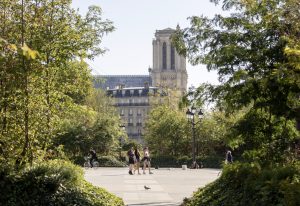
The “village” concept that former Mayor Anne Hidalgo tried to champion for Paris will be further developed. More and more traffic lanes will be converted for walking, buses and bicycle use. The goal of the Grégoire administration is to make access to Paris by car costly and time consuming enough to progressively discourage private car use in favor of public transport and soft mobility. Reducing car access to the capital will likely shift congestion onto the ring road and into neighbouring municipalities - many governed by mayors with very different political priorities. Coordinating a coherent regional mobility policy will require sustained negotiation with the Île-de-France region and the Métropole du Grand Paris, both outside Emmanuel Grégoire’s direct control. Prices of residential underground parking lots will decrease significantly as demand will drop. What was once a valuable asset may become a liability.
*
Paris will become an increasingly regulated environment for business. Prime private real estate will remain scarce and continue to command premium prices. For restaurants, cultural industries, car-sharing services, local retail, and leisure businesses, this creates opportunities. For traditional office real estate and car-dependent businesses, it will become a structural headwind –many companies will be forced to make a strategic choice between staying in Paris or relocating outside.
The city's fundamentals - its cultural dominance, infrastructure, international profile - will only become more visible.

Almost a quarter of a century ago, on 18 March 2001, the Socialists conquered the prestigious Hotel de Ville – the Paris mayorship. For more than two decades, the Right and then the Macronists have unsuccessfully tried to take it back. The Right has been gaining strength in French society in recent years and the 2026 election seemed to be the perfect opportunity to capture this prestigious prize. However, it appears that the Paris mayorship will remain a mirage for the Right as history looks to repeat itself.
Candidates & Polls
As the 15 and 22 March 2026 election rounds approach, the Socialist candidate Emmanuel Grégoire (48) is in pole position. He is a deputy mayor and political heir of current mayor Anne Hidalgo, who decided to step down after 12 years.
The vote will be highly political and Paris leans politically to the Left. All candidates who pass the 10% threshold advance to a second and final round, in which the candidate who’s list receives the most votes wins the most delegates and, automatically, the Mayorship.
Currently, five candidates could make it to the second round. Polls indicate that Mr. Grégoire leads the group with 32%. He is followed by Mrs. Rachida Dati (Republicans - Right) – his major challenger - with 28.5%, Mrs. Sarah Knafo (Reconquest - far right) with 13.5%, Mr. Pierre-Yves Bournazel (Horizons - Center) with 12%, and Mrs. Sofia Chikirou (Unbowed France - far left) with 10.5%.
Almost all scenarios point to Mr. Grégoire as the future mayor of Paris. If all five candidates mentioned above advance to the second round, the distribution of the votes for the candidates who received less than 10% will not change the rankings. Considering this data, there are not many options for the French Right to prevent Mr. Grégoire’s victory.
The Right’s (Limited) Strategic Options
The first option is an alliance between Mr. Bournazel and Mrs. Dati for the second round. This alliance is possible but complex. Mr. Bournazel is backed by former French Prime Minister Edouard Philippe, who broke with President Macron, while Mrs. Dati only recently stepped down as a minister in the current Macronist government. To make it happen it would need President Macron to request his former Prime Minister support for Mrs. Dati. This alliance would not automatically make Mrs. Dati the winner, but it would strongly increase her chances and dynamics, especially if Mrs. Chikirou makes it to the second round.

The second scenario would be an alliance between Mrs. Knafo and Mrs. Dati. Mrs. Knafo, a young and ambitious European MP, proposed to unite the two lists under her leadership. Such a proposal is not even considered by the Dati camp since Mrs. Knafo is well behind in the polls. However, his utopical common list was tested by the polls and, surprisingly, it appears that it would beat Mr. Grégoire in the second round (46% to 42%). Without a last-minute turnaround, Mrs. Dati and Mrs. Knafo will compete against each other on the second round of the election, on March 22.
Finally, the least likely scenario is an anti-Grégoire front for the second round, regrouping Mrs. Dati, Mrs. Knafo, and Mr. Bournazel.
Potential Regulatory Risks for Real Estate Investors and Developers
During the campaign, Mrs. Knafo argued that the city should stop authorizing new office buildings in order to prioritize housing. Some of the other candidates shared their views against Airbnb and other tourist rental platforms, with Mr. Grégoire and Mrs. Chikirou promising to fight against landlords and companies who propose "tens of thousands of illegal tourist rentals". While these actions respond to the capital’s housing shortage, they illustrate how urban planning could become a highly politicized issue in the coming years. It could also impact future openings of co-working areas in residential buildings.
For investors and real estate developers, these are clear signals that, regardless of the electoral outcome, the next municipal term could therefore see increased regulatory pressure on commercial real-estate and tourist rental projects in Paris.
*
Once again, divisions within the French Right and between the Right and the Center appear to be paving the way for another Socialist victory. Unless forces on the Right manage to overcome their rivalries and build a credible electoral coalition, the Paris mayorship is likely to remain out of reach. The capital would thus continue to stand as the main stronghold of the French Left and could play an important role in shaping the political landscape ahead of the 2027 presidential election.

On Sunday, May 18, Interior Minister Bruno Retailleau was elected President of the Les Républicains (LR) - center-right - with 74.3% of the party members' votes, defeating Laurent Wauquiez, who secured 25.7%. This victory positions Retailleau as a central figure in reshaping the French right ahead of the 2027 presidential election.
Implications for Government Dynamics
Retailleau's leadership of LR, a party with greater political weight than Prime Minister François Bayrou's MoDem, may alter the balance within the government. Besides Retailleau’s new position as party leader, Bayrou is currently embroiled in a scandal involving allegations of long-standing abuse at the Bétharram private Catholic college in Pau region, his political stronghold. From now on, negotiating texts and getting the Minister of Interior's approval becomes a much more difficult task for the Macronist ministers. Retailleau aims to maintain LR’s distinct identity inside the broader Macronist movement. He is expected to remain in the government and represent this identity promoting a strong State on interior, defence, finance and foreign policy. However, should Bayrou resign due to the Bétharram scandal, and Retailleau be offered the Prime Minister role, he will surely decline to focus on preparing for the 2027 presidential race.
A New Rival for the Far Right
With Marine Le Pen declared ineligible for the next presidential election due to an embezzlement conviction, and with Jordan Bardella as her young and unexperienced successor, Retailleau's election poses a strategic challenge to the National Rally (RN) - far right. His firm stance on security and immigration, coupled with his governmental and local experience, makes him appealing to far right voters. Recognizing this danger, former LR leader and now NR satellite, Éric Ciotti, proposed Retailleau to join an "Union of the Right". However, the Minister has no intention to accept. He wants to develop his own platform and attract people from the RN and macronists, as Nicolas Sarkozy successfully did with LR's ancestor - the Union for a Popular Movement (UMP).
Revitalizing Les Républicains
Under Retailleau's leadership, LR seeks to recover from previous electoral setbacks, including 8% in the 2024 European elections and 5% in the 2022 presidential elections. While LR maintains strong organizations in smaller municipalities and in the countryside, it lacks control over major cities. Gaining leadership in urban centers such as Paris, Marseille, Bordeaux, Nice, and Lyon is a priority in Retailleau's positioning for a presidential bid in 2027. Achieving this may require strategic alliances with Macronist candidates, allowing LR to nominate candidates in some major cities in exchange for supporting Macronist candidates elsewhere.
After eight years of drifting on the margins of politics, squeezed between Macronists and the far right, LR now faces a major rebuilding effort. But the most important step has been taken: the party has rallied overwhelmingly behind a strong leader.
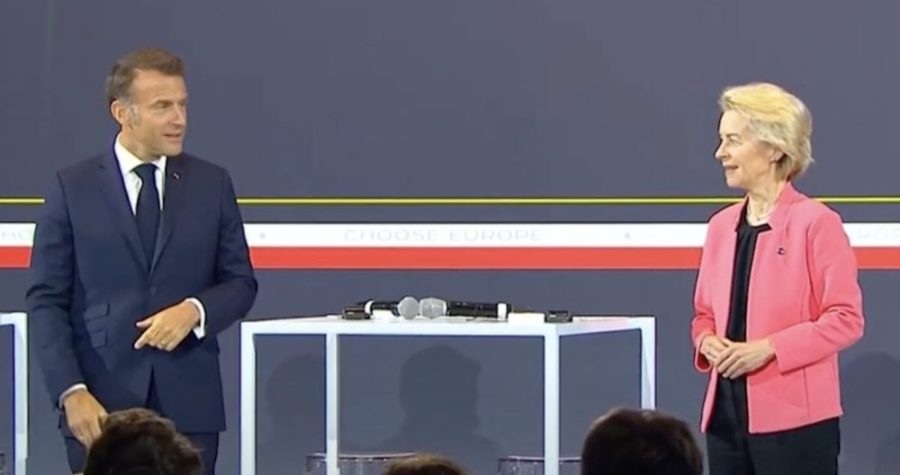
On May 5, President Macron and European Commission President Ursula von der Leyen gathered in Macron’s favourite venue for big speeches - the ancient convent of Sorbonne University, in Paris - to launch his latest initiative, “Choose Europe for Science.” The goal is to attract US researchers affected by Trump-era budget cuts and the increasingly challenging research environment in the US.
Von der Leyen announced €500 million in EU funding, while Macron pledged €100 million investment to stimulate the arrival of foreign researchers. Additionally, von der Leyen declared that EU member states will be required to allocate 3% of their GDP to R&D investment. The two leaders portrayed the EU as a “land of freedom” for scientists, with von der Leyen revealing plans for a European Act to enshrine the freedom of scientific research into law.
In France, Aix-Marseille University has already announced plans to select 15-20 lead researchers, each receiving between €0.6 and €0.8 million budgets over three years. However, the university has not specified which disciplines will be targeted.
Despite the fanfare, the initiative has sparked dissatisfaction - particularly among French researchers who recently faced €500 million in domestic budget cuts. French senator Pierre Ouzoulias, himself a CNRS researcher, criticized the plan as inconsistent with France’s national policy of cutting research funds.
In Italy, Prime Minister Giorgia Meloni is reportedly upset for two reasons: the initiative spotlights France as the primary destination for US researchers, and it risks deepening the rift between the US and Europe - a divide she has been working to bridge. According to La Stampa, Meloni even asked Italian university presidents not to attend the “Choose Europe for Science” Summit to avoid signaling an endorsement of Macron’s plan. Nonetheless, Macron and von der Leyen both highlighted Italian Bologna University as a European beacon of knowledge.
Macron’s summit seems primarily aimed at capturing the spotlight. It remains unclear how France’s €100 million budget will be allocated in concrete terms, but it is expected to finance around 150 projects and attract a maximum of 500 researchers - a modest figure compared to the CNRS’s 32,000 researchers. The political substance of the summit was underscored by Macron’s open criticism of US policies toward researchers, which he described as “an error.” However, perhaps the most consequential announcement in Paris came from von der Leyen, who pledged that EU member states would allocate a minimum of 3% of GDP to R&D - a level that would surpass both China and the post-cut US. The bad news is that research is not an EU competence, so this percentage can hardly be imposed to the EU member states. On top of that, EU countries that are also NATO members already face tight budgets and growing pressure from Trump’s demand to raise defense spending to 5% of GDP.
President Macron’s move underscores how geopolitical competition is expanding into areas that were more or less preserved. A new term is emerging - “scientific asylum” - which suggests that nationality is starting to replace merit, brilliant ideas and hard work in the field of research. It is also a brutal wake-up call for young people who dedicated their energy and talent to pursuing their dreams.

During the last two weeks, a new campaign of violence surfaced in France: coordinated attacks against prisons and prison guards. Beyond the immediate threat to public security, this wave of violence risks is destabilizing an already fragile political landscape - forcing the French government to act fast and efficient.
Between April 13 and April 21, eight prisons, four residential buildings housing prison staff, and personal vehicles belonging to prison staff members were attacked. Investigations have been opened on charges of “terrorist association for one or more crimes against individuals” and “attempted assassination of a person vested with public authority”. Who is behind this wave of violence? Why is it directed exclusively at prison staff and not at other police forces? How far can it escalate?
This new crisis emerges in an already fragile security environment. Since the 2015 terrorist attacks, the French army, gendarmerie, and police forces have experienced a significant surge in workload. With detainee numbers at an all-time high, prison staff have reported exhaustion and increased psychological stress. Many officers are on medical leave, which further strains their colleagues. A major shock occurred in May 2024: a van belonging to the prison administration was ambushed during a detainee transfer. Two prison officers were killed, and the escorted drug baron, Mohammed Amra, escaped — only to be captured nearly a year later in Romania.
The perpetrators of this new wave of violence call themselves the “Defense of the Rights of French Prisoners” (DDFP). They claim to denounce “violations of fundamental rights that French Justice Minister Gérald Darmanin intends to impose”. On the other hand, the Minister argues that the drug mafia is behind these acts, retaliating against the "Narcos Law" promoted by the French National Assembly. Two "super-prisons" for drug lords will be created, after the Italian prison model for the convicted Mafia bosses. Once passed, this law will prevent arrested drug leaders to continue conducting their businesses, ordering murders and kidnappings, and threatening people outside. The use of a Kalashnikov assault rifle during the attack on Toulon prison and the timing of these attacks during the parliamentary procedure of the "Narcos Law" come to support the Minister’s accusations.
This somehow unexpected escalation of violence complicates France’s already volatile political landscape, especially amid the rising popularity of the far-right National Rally and its allies. The French government must take strong action to avoid an all-out confrontation, similar to Italian Cosa Nostra's “war against the State” - particularly because it is accused of complacency towards criminality by the opposition forces. Both the Justice Minister and the Interior Minister hide presidential ambitions for 2027. Justice Minister Gérald Darmanin has therefore seized the opportunity to launch a major counter-offensive. Nearly 200 investigators have been mobilized, and elite units from the Ministry of Interior have been assigned to this case. As a result, twenty-five suspects were arrested on Monday, April 28.
From a business perspective, if the conflict between drug gangs and authorities escalates and spreads into downtown areas of French cities, it could severely impact tourism, catering, and real estate prices. Even localized violence in the suburbs would increase security costs for stores and banks, and drive up insurance premiums for businesses and vehicles. Already under fiscal pressure, the French government cannot afford to lose revenues from weakened economic activity and investor hesitation. Containing this security crisis swiftly is not only a political imperative, but also an economic one.
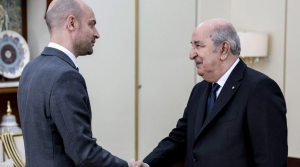
Franco-Algerian relations, already strained, took a sharp downturn on Monday, April 14, when the Algerian government expelled 12 French diplomatic staff, working as police cooperation agents. The decision was motivated by the arrest in France of 4 Algerian citizens, including a consular agent, on kidnapping charges. This bold escalation sent a clear message to the French Interior Minister Bruno Retailleau, the chief architect of a tougher immigration policy: Algiers would not tolerate any pressure or intimidation from Paris. Hoping in vain for a reversal of the decision, France was eventually forced to respond in kind, expelling 12 Algerian diplomatic and consular officials. As a further expression of protest, it recalled its ambassador to Paris for consultations.
With far-right voices demanding his resignation, Foreign Minister Jean-Noël Barrot continues to call for diplomacy as the only path toward restoring bilateral ties with Algeria. So far, diplomacy has led nowhere. Only 8 days after Barrot's visit to Algiers, on April 6, and his announcement of "a new beginning" in Franco-Algerian relations, tensions reach new heights. Algeria continues to refuse the repatriation of Algerian nationals ordered to leave France, and the writer Boualem Sansal - a French-Algerian dual national - remains imprisoned in Algeria despite repeated French requests for his release, citing his age and his cancer illness. Algeria’s firm stance is rooted in a mix of historical memory, resentment toward France’s recent pro-Moroccan position on Western Sahara, and a strengthened geopolitical status as the EU’s third-largest gas supplier, after Norway and the United States.
French diplomacy appears stalled. Paris cannot compel Algiers to take back its citizens. It also fears that continuing with assertive anti-immigration policies toward Algeria could provoke unrest among Algerians living in France. The termination of the 1968 French-Algerian agreement - which facilitates residence permits for Algerians who open businesses or work as freelancers in France - now seems very likely. While such a move might reduce future migration, it does little to address the issue of Algerian nationals involved in criminal activity on French soil.
Minister Retailleau, a central figure in the diplomatic standoff, cannot be removed from office by President Macron. Dismissing him would likely be perceived as a sign of weakness. Moreover, public sentiment appears to support Retailleau’s firm stance: in a recent Le Figaro online poll, 87% of respondents said France had not been tough enough on Algeria. Though not a scientific survey, it reflects a growing sense of frustration. While public opinion demands more firmness, France lacks the necessary tools to implement a tougher policy. If Retailleau is elected president of the Republican Party (right) next month, he could step down from the government to focus on party leadership—potentially opening the door to de-escalation. However, his departure would not necessarily signal a substantial shift in France’s policy toward Algeria, as too much flexibility could pave the way for the French far right. A new approach is urgently needed, and if he cannot come with a strategy, President Macron might reshuffle some other key figures managing this dossier - such as the minister of Justice, the minister of Foreign Affairs, or the ambassador to Algeria.
The Franco-Algerian crisis perfectly illustrates how domestic and international political agendas can quickly intertwine, escalating into full-blown diplomatic standoffs - especially when migration, identity, and sovereignty collide. For now, the French government’s options are limited, caught between public pressure to curb migration, a lack of effective enforcement tools, and an increasingly assertive Algerian government.
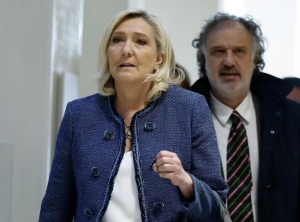
Convicted and declared ineligible for public office, Marine Le Pen has decided to fight. She has no choice: after a 25-year political career, she can’t afford to bow out in a courtroom. If she wins her appeal - scheduled for the summer of 2026 - she’s back in the race for the presidency—stronger than ever, riding a wave of sympathy as the target of a “politicized” justice system. If she loses, she’ll have to step aside and make room for her successor, Jordan Bardella. But stepping aside now would expose Bardella too early. He’s still relatively inexperienced, and two years under media fire could fatally damage his chances.
One battleground could be Parliament. Bringing down Macron’s government might satisfy her base—but it’s risky. A snap election would mean she immediately loses her MP seat due to her ineligibility. Worse, triggering internal political chaos could push voters to back a more moderate figure in 2027, like former macronist Prime Minister Édouard Philippe. That’s why, even if the left pushes for a no-confidence vote, Le Pen’s National Rally probably won’t support it. Their strategy is simple: let Macron’s camp limp into 2027.
Street protests are another card Marine Le Pen might play—but the early signs aren’t great. Her April 6, 2025, rally, in Paris - Place Vauban, drew only 7,000–8,000 supporters. The upside for her is that rallies held the same day by the left and by Macron’s party leader, Gabriel Attal, attracted even fewer people. Still, with warmer spring weather ahead, it's unlikely she’ll be able to mobilize massive crowds. That said, she’s not dropping the street strategy just yet. A new rally is planned for May 1, in Narbonne—a National Rally stronghold, where her party won an MP seat last year against a left–macronist alliance. The choice is tactical.
Finally, another option for Marine Le Pen is to fight in the international arena. Many foreign leaders expressed support for her, immediately after she got convicted (Donald Trump, Giorgia Meloni, Viktor Orban, President Putin’s spokesperson Dmitri Peskov). So, she can work to reinforce her position in the European Parliament, push her European parliamentarians to be more assertive towards initiatives from the Popular, Renew and Socialist Groups. She can also strengthen her ties with European conservative and “trumpist-minded” leaders, such as Orban, Wilders, Fico, Milei, build ties with Donald Trump, and repair her relationship with Nigel Farage. French people are highly averse to external pressures on their deciders or the judiciary, so these foreign allies will never urge judges to decide an acquittal for Marine Le Pen. However, such conservative alliances could throw a wrench into president Macron’s European and global initiatives for the last two years of his mandate and make his foreign policy track record look highly insufficient.
In short, Le Pen’s best option may be a low-exposure strategy: keep the rallies going here and there, and build up conservative alliances abroad, while waiting for the legal battle to play out.
It's already a fist victory for the French Left, who announced the creation of a large alliance for the 30th of June snap election. This alliance is called the "New Popular Front" and the title is not chosen randomly. It recalls the coalition between leftist and radical (center) forces in 1936, to counter the rise of the "leagues" and former First World War veterans associations, considered as "fascist" movements.
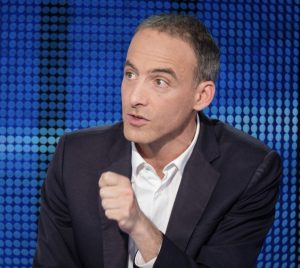
This alliance is formed by the Socialist Party, the Rebellious France, the Communists, the Ecologists and smaller leftist forces such as Public Place (Raphael Glucksmann), GenerationS (Benoit Hamon), The New Anticapitalist Party (Philippe Poutou) as well as other even smaller groups, civil associations and syndicates. When you look to the right of the French political landscape and you see the scandals and exclusions from the last days (Eric Ciotti, Marion Maréchal), this Left coalition shows a lot of political maturity. Historically, in four crucial moments of the French history the Left managed to get over its divisions and unite to accede or conserve power: in 1877, under Léon Gambetta, it got rid of the monarchy restoration claims and durably anchored the Republic; in 1936, the first Popular Front led to the Léon Blum and Camille Chauteamps governments; in 1981 it formed the Mauroy II Socialist-Communist government and in 1997 the Plural Left coalition governed France until 2002. The united Left also had a failed attempt under the Common Program led by Socialists and Communists, but their coalition didn't manage to elect François Mitterrand as President of the Republic in 1974 and eventually was dismantled in 1977. However, in all these previous five occasions, the left had powerful figures such as Léon Gambetta, Jules Ferry, Léon Blum, Maurice Thorez, François Mitterrand, Georges Marchais, Claude Estier, Lionel Jospin and Dominique Strauss-Kahn. This is not the case now. While Jean-Luc Mélenchon is acting low profile because of his divisive and radical character, only Olivier Faure, the Socialists' First Secretary, and Raphael Glucksmann, the Public Place leader, are better known to the public opinion. The absence of strong leaders is a clear disadvantage for such a large coalition.
It is commendable that divergent opinions regarding Ukraine and the Israeli-Palestinian conflict did not hamper the forming of this alliance. The Socialists and Public Place imposed their positions on these two issues to the Rebellious, as the program of the New Popular Front underscores the support for arms delivery to Ukraine and condemns the " terrorist massacres".
The alliance puts a lot of pressure on the Presidential majority, who is now relegated in a fragile third position in a first-pass-the-post election. If President Macron was hoping that the short timespan left until the snap election would not allow the left to unite its forces and to support support his candidates, he got it wrong. As it stands today, it looks like most of the second round finals on July 7 will be between the National Rally and the New Popular Front.
After he publicly praised the New Popular Front alliance on the evening of June 13, the official announcement came two days later. François Hollande is running for an MP seat in his Tulle stronghold. It is quite strange for a former President of the Republic to run for an MP seat, only Valéry Giscard d'Estaing doing that in the entire history of the Vth French Republic. Hollande justified this move by a need to get over divergences and "get to the core of things", which is now the imperious need to block the far-right's rise to power.
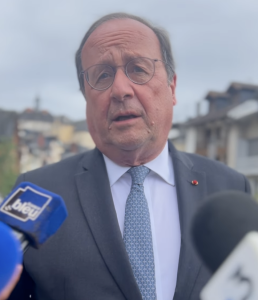
It is clear that François Hollande was searching for an appropriate moment to get back into politics. The timing looks great, since the left will probably get a good score and, as a former President, François Hollande will be one of the leaders of the new alliance. This news took by surprise the Headquarters of the Socialist Party, who prepared another candidate for that specific constituency. The Headquarters "took note of the local organisation's decision to invest former President Hollande". French media report that Hollande somehow inlayed himself to an evening party where wasn't invited. His run is contested by many voices, including by his former Prime Minister, Manuel Valls, who accused him to take seat at the same table with the Rebellious. Far-left movements of the New Popular Front also criticized Hollande for putting a halt to social reforms during his presidential mandate and for paving the way for Emmanuel Macron's accession to power.
François Hollande's bid sends a strong message of inclusion and willingness to gather all voices of the Left, but only time will tell if he will be an asset or a millstone for the New Popular Front. At least for the snap election, the future of this alliance looks rather rosy.
We just witnessed the craziest 72 hours in a decade for the French Right. Only the elimination of Nicolas Sarkozy and Alain Juppé by François Fillon in the party contest for the 2017 presidential election could compete with what happened since Monday, June 10th.
After president Macron dissolved the National Assembly, both the Republicans and the Reconquest leaderships showcased their division upon the strategy to follow for the snap election. Unfortunately, only two options lie ahead of them: either they stand in the future parliamentary election on their own, either they enter a wider Right Union platform, led by Marine Le Pen's National Rally. Being part of the platform will bring them a consistent presence in the future Assembly, while standing alone will make them irrelevant, because the scrutiny is a two-round first-past-the post and this type of scrutiny goes strongly against small parties' candidates. However, entering the French Assembly as satellites of Marine Le Pen is not ideal for any of these two parties.
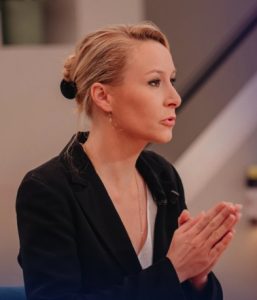
Against this background, Marion Maréchal moved first and tried to strike an agreement between her party (Reconquest) and the National Rally. It is unclear who mandated her to do that but, after a relative openness from Jordan Bardella and her aunt, Marine Le Pen, the National Rally informed her that it doesn't want any "direct or indirect" association with the Reconquest leader, Eric Zemmour. Nevertheless, Zemmour strongly defended his position to present Reconquest candidates in all French constituencies. Marion Maréchal and her team publicly criticised her party leader's position, considering it a huge mistake that will pave the way for either a Macron or a Leftist victory in the snap election. On Tuesday, Zemmour decided to exclude Marion Maréchal of Reconquest on "betrayal" grounds. Marion announced that she will support the Right Union candidates, but she will not join the National Rally.
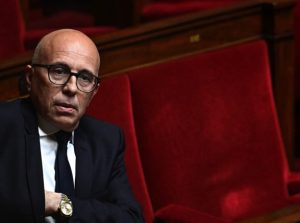
At the Republicans, it was the president himself, Eric Ciotti, the one who decided to enter into an agreement with the National Rally. This means that the National Rally will not propose any candidate in some 80 constituencies, leaving the Republicans as sole candidates on behalf of the right. The Republican Party Committee unanimously excluded president Ciotti, who sued the putschists in Tribunal. Ciotti allegedly tried to prevent the meeting that led to his exclusion by closing the party offices and sending employees at home for Wednesday afternoon. However, a "traitor" offered a key duplicate to the Republicans Secretary General, Annie Gennevard. Gennevard, together with the no. 1 on the Republican list for the European election, François-Xavier Bellamy, and the Treasurer of the party, Daniel Fasquelle, took over as an interim leadership. However, all this takes a rather comic turn on Thursday, 13th of June, when Ciotti returns to his presidential party office to work "for France". Questioned about who would he support in a second round, in those constituencies where Republican candidates will be eliminated in the first round, Bellamy said he would "obviously" support the National Rally. Therefore, Republican putschists clearly consider any pre-electoral agreement with the National Rally as unacceptable, but they could support Marine Le Pen's candidates in a second round. This looks rather as an ideological position, originating from the historical rivalry between the movements that led to the actual National Rally and Republican parties, and not a position that is based on today's realities.
If the Republicans and Reconquest decide to stand on their own in the snap election, our take is that it will be very difficult for any of them to form their own parliamentary group of 15 MPs in the future Assembly. Their MPs will anyway vote similarly to the biggest right group in the future Assembly, the National Rally group. Moreover, if the 80 Republican candidates that will be supported by the National Rally will be excluded from the party, the Republicans will go through a painful division that might throw them definitively outside of the political game for the first time since 1958.
French results for the European Parliament came up with very few surprises. For the last couple of months, the polls gave quite precise predictions. So the results below were more or less expected:
National Rally (far right) - 31,4%
Renew (presidential majority - Macron) - 14,6%
Socialist Party - 13,8%
Rebellious France (Mélenchon, jacobin left) - 9,9%
The Republicans (center right) - 7,3%
Ecologists - 5,5%
Reconquest (right) - 5,5%
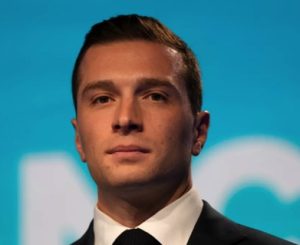
However, it came with a bit of surprise that the National Rally "only" got 31,4%, since polls credited Marine Le Pen's party list with 34-35%. Also, the presidential list was supposed to get over 15% of the votes and it arrived below this threshold.
There were many winners in these elections. Of course, the main winner is the National Rally, who improved its score by 8% to top at 31,4% far ahead of all its opponents. The Socialists more than doubled their score, from 6,2% in 2019 to 13,8% with the same number one, Raphael Glucksmann. The Rebellious also improved from 6,3% to 9,9%. And of course, Marion Maréchal's Reconquest, that did not compete 5 years ago, made it into the European Parliament with 5,5%.
On the other hand, the big losers were President Macron's proxy Valérie Hayer from Renew and the Ecologists. The list of the presidential majority lost more than 1/3 of the votes it received in 2019, going down from 22,5% to 14,6%. Renew still came second after the National Rally, but in 2019 it was only one percentage point behind the National Rally, while this time it got less than half of the National Rally's votes.
The Ecologists were also big losers of these elections, going from a record score of 13,48% in 2019 to only 5,5% in 2024.
On a lower level, the list of François-Xavier Bellamy for the Republicans lost only 1,5% compared to 2019.
When everybody thought they were heading to a quiet electoral evening, President Macron took everybody by surprise and announced the dissolution of the National Assembly and a snap parliamentary election for June 30 and July 7.